Reviewing Every Nurse Has a Bestfriend for Real Embroidery
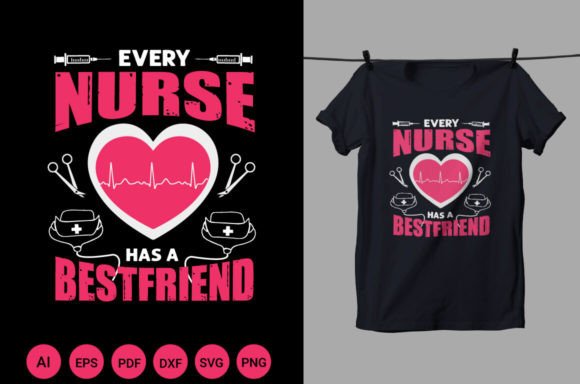
As someone who has spent years digitizing and stitching designs for clients, I have learned that a pretty image on a screen does not always translate to a quality finished product. When I first opened the file for Every Nurse Has a Bestfriend, my immediate reaction was one of cautious optimism. This is not just another generic medical graphic; it is a piece of T-Shirt Designs art that relies heavily on sentiment and clean lines. For embroidery designers and Etsy sellers, understanding how this specific asset behaves under the needle is crucial before offering it as a personalized gift or adding it to your craft business inventory.
First Impressions and Visual Personality
The mood of Every Nurse Has a Bestfriend is warm, appreciative, and slightly playful. It captures the unique bond between healthcare workers, which is a powerful emotional hook for buyers. Visually, the design feels balanced. Because it is described as being made with 100 vector shapes, the lines are crisp and scalable. This is a significant advantage for us in the digital space. Unlike raster images that pixelate when enlarged, these vector-based Graphics allow us to resize the artwork without losing definition. This flexibility is essential when adapting a design from a large sweatshirt back to a small chest logo or a tiny baby onesie.
However, as an experienced reviewer, I look past the aesthetics to the technical reality. The description notes that the colors are 100% changeable. In embroidery, color theory is everything. A design that looks vibrant on a white background might disappear on navy blue if the contrast is not managed correctly. The ability to easily swap colors means you can tailor this machine embroidery design for any uniform color, but it also places the responsibility on you to choose thread combinations that ensure readability.
Real-World Application: Beyond the T-Shirt
While the product is categorized under T-Shirt Designs, limiting it to shirts would be a missed opportunity. I recently tested a similar layout on a canvas tote bag for a nursing graduation gift. The result was striking. The sturdy fabric of a tote handles stitch density well, allowing the text and graphical elements to sit flat without puckering. This makes Every Nurse Has a Bestfriend an excellent candidate for a tote bag design or even a durable apron for clinical instructors.
Consider the market for sweatshirt embroidery. Nurses often work in cold environments, making high-quality hoodies and crewnecks popular items. When applying this design to heavier fabrics, the vector nature of the source file helps. You can scale it up to fill the back of a jacket or keep it modest on the front left chest. For custom apparel shops, this versatility is a selling point. You are not just selling a stitch file; you are selling a solution for various garments.
Another viable avenue is the embroidered patch. Patches are trending in boutique branding and handmade goods. Because the design is composed of distinct shapes, it could be adapted into an applique or a dense fill stitch patch. This transforms the item from a simple garment decoration into a collectible accessory. For small shop product lines, offering patches allows customers to add the design to items they already own, expanding your potential customer base.
Technical Considerations for Stitching
Before you load this into your machine, there are critical technical factors to address. The source files are AI or EPS, which are vector formats. This means you will likely need to digitize the design yourself or use auto-digitizing software with caution. Auto-digitizing often creates excessive jump stitches and poor pathing. As a professional, I recommend manually adjusting the stitch types. Use satins stitch for smaller text elements to keep them sharp and legible. For larger graphical components, a fill stitch with appropriate underlay will provide stability and texture.
Pay close attention to stitch density. If the design has overlapping elements, too much density can cause thread breaks or fabric distortion. Test the design on scrap fabric first. This is non-negotiable. Check how the threads interact with the material. On thin fabrics, you must use a cut-away stabilizer to prevent the design from pulling the fabric out of shape. On stretchy materials like jersey knits, proper hooping and stabilizer selection are vital to maintain the integrity of the embroidery project.
Also, consider the hoop size. Ensure the scaled design fits comfortably within your machine’s maximum hoop area, leaving enough margin for the frame to grip the fabric securely. If you are stitching on curved surfaces like caps, the design may need further adjustment to account for the curvature, preventing distortion in the final look.
Navigating Fabric and Color Challenges
The description mentions easy color changes for dark or white t-shirts. This is practical advice. On dark fabrics, light thread colors pop, but you may need to add a layer of white underlay or use a backing film to prevent the dark fabric from showing through the stitches. This technique, often called "topping," is essential for maintaining the vibrancy of your thread colors. Conversely, on white fabrics, ensure your thread has enough saturation so the design does not look washed out.
Be cautious with textured fabrics. Fleece or terry cloth can swallow small details. If you plan to use Every Nurse Has a Bestfriend on a towel or blanket, simplify the design or increase the stitch length to ensure clarity. Tiny lettering can become illegible if the fabric pile interferes with the needle penetration. Always inspect small details in a black and white mockup to judge contrast independent of color.
Commercial Viability and Brand Trust
For commercial embroidery professionals, the quality of your output directly impacts customer trust. A clean, well-stitched design enhances brand consistency and perceived value. When customers receive a handmade product that looks professional, they are more likely to return and recommend your services. This design, with its clear theme and adaptable nature, supports high-quality presentation if executed correctly.
However, always verify licensing terms. Just because a file is editable does not mean it is free for commercial resale as a digital file. Typically, you can sell the finished product—the stitched shirt or bag—but not the digital embroidery file itself. Confirm these details with the creator to protect your business. Using proper design assets legally builds a sustainable craft business.
Final Verdict for Makers
Every Nurse Has a Bestfriend is a strong contender for your next embroidery file addition. Its vector foundation offers the scalability needed for diverse applications, from baby embroidery on onesies to large holiday embroidery projects on sweatshirts. It requires thoughtful digitizing and testing, but the payoff is a versatile, emotionally resonant design that appeals to a dedicated niche. Whether you are creating printable mockup previews for your online store or stitching actual items for a local craft fair, this design holds up under scrutiny. Treat it with the technical respect it deserves, and it will serve your creative entrepreneurs journey well.